Thursday, October 24, 2013

"Granddaddy, Come Home"

There is a dichotomy in American that pits our much-ballyhooed “love of freedom” against our disdain for it. In the past, it was people of color – African-American slaves, Native Americans forced onto reservations, Japanese-Americans forced into internment camps – who suffered the indignities of this split personality. Today, it is the families of America’s prisoners.

For 250 years, this American nation imprisoned an entire race of people called them “slaves”, and declared that they had no rights. Then, they proceeded to build a southern economy – the plantation system – upon the backs for these hapless men, women, and children. These southerners spoke of God and of “honor” while inflicting endless abuse upon their captives. They fortified this system of slavery with laws and institutions so that it would last.

When President Lincoln issued the Emancipation Proclamation, it had a visceral effect on the South. One southerner called Lincoln’s plan “despicable.” It would take the deaths of 600,000 men in America’s Civil War to convince the South to let its captives go.

Today, Americans talk of being a “forgiving people” – a people who believe in “second chances”. These Americans are no more sincere than the men of the antebellum South who spoke of “honor” even as they castrated black men, raped black women, and sold black children.

Slavery was one big prison cell that stretched from Maryland to Texas. After it was dismantled, America revisited its zeal for the imprisoned people with the internment of Japanese-Americans during WWII. Entire families and communities had their lives ripped away for no other reason than America had the power to do so. There was no guilt in those imprisoned Japanese-Americans. They were loyal, honorable American citizens. The guilt was founded in the DNA of people who feel empowered when they imprison. 

One hundred and fifty years after slavery, America still boasts the most elaborate system of prisons on Earth. And for many Americans – even today – to speak of freeing someone from one of America’s gulags is hateful.

In 2012, Mississippi governor, Haley Barbour, came under fire for pardoning prisoners his last days in office. Incredulous Americans asked, “What’s wrong with him?” Real Americans should be incredulous at those Americans’ incredulity, and ask, “What’s wrong with them?” 

Proponents of victims’ rights were the first to speak out against Barbour. (Their thirst for vengeance is becoming legend.) When they want to accent their fear of released prisoners, they speak of a “chilling effect” – a scare tactic, similar to how slaveholders would stoke this nation’s fear of emancipation by offering up images of freed black men “roaming the countryside.” 

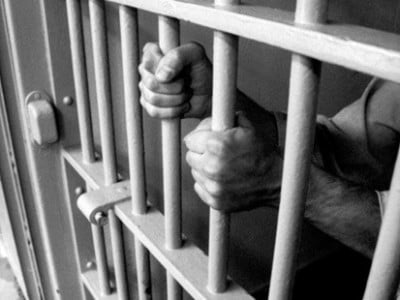
These Americans think nothing of a prisoner who is eligible to go home, spending another five years, another ten years in bondage. If you were to ask: “What about the child who longs for her imprisoned granddad to take her fishing?” many of these “prison zealots” are likely to respond, “What about me?” They know nothing of prison, or of what it does to the families of prisoners.

Be assured: Prison is a kicking. Prisoners are kicked, and kicked, and kicked. It is a figurative kicking, unlike slavery which was a literal kicking. But, it is a “kicking” all the same. And, you’re not just kicking prisoners, America. You’re kicking children and elderly parents. You’re kicking the life out of them.

The parallels between prison and slavery are just. Slavery was about denying a people their rights to a pursuit of happiness. Prison in America has become a matter of denying the families of prisoners those same rights.

Of course, punishment is necessary when people commit crimes. But when that punishment becomes gratuitous; when it drags on and on – when a nation wreaks endless suffering upon one segment of its own people, the soul of that nation despairs. 

The institution of slavery was a sick enterprise. There, the slave master despised his slave so that he heaped endless indignities upon him. Yet, he seemed to love his slave so that he was willing to see the entire house burn down rather than let his slave go. 

Prison is not slavery. But as long as indignities are heaped upon prisoners as though they are hated, yet they are kept endlessly as though they are loved, we must begin to wonder if the State knows the difference.

Five months ago, I stopped wondering. On the 18th of May, I embarked on a hunger strike to protest the treatment of prisoners and their families in America. In the ensuing 88 days, I refused all of the 264 meals offered to me. I suffered plenty. Such was my resolve to challenge a system that holds me and my family, and thousands of others, far beyond our release dates. 

During my hunger strike – what I call “My days in the wilderness” – I received letters from people around the country, many imploring me to eat, lest I die. Many more assured me, saying “You will be going home one day.” They assume I, and many other prisoners, will be going home without understanding the nature of America’s prison system. Maybe I will be going home one day, but “one day” is not good enough.

America’s slaves would talk about “One day.” They would say to one another, “One day we will be free.” They kept saying that for 250 years. “One day” is not justice. “One day” is what you say when there is no justice.


I ended my hunger strike on the 15th of August, but my fight goes on. There is justice to be had in America. There are babies out there who want to go fishing. I have great limitations. But if it is the last thing I ever do, I will be trying to help those babies get their granddaddies home.   

Tuesday, October 8, 2013

Living Means "Moving On"

At the heart of Michigan’s prolonged incarceration of it prisoners population it this fallacy:  Prisoners are not quite American – (not quite human) – and so can be denied rights which, according to the Bill of Rights, are unalienable, among which is the hope of happiness. 

A recent national survey shows that the State of Michigan keeps prisoners confined longer than nay other state in the Union. So it is no wonder that Michigan Parole Board interviewer, Jayne Price, told me at my April 22nd parole hearing:  “You have not served enough time to be granted a parole,” (when, according to the law, I had).
        
Later, in July, I received a letter from the parole board telling me my parole had been denied because I still pose a danger to society, despite my having no incidence of criminal behavior before or after my only offense.
 
Now, in a case summary, that same parole board writes that I “…lack understanding of the serious nature of my offense.” Who are these people, and why?

Any mature person who is honest with himself has looked into the mirror and hoped one day to be a better human being. I have looked into that mirror these past years in prison, and I have hoped (and I have prayed) that I would become better, especially in my treatment of, and my sensitivity toward, all other human beings.
 
Today, I am that better person – I feel it. And I get anxious wondering if I’ll ever get the opportunity to be that “better person” – to model that positive behavior toward the people who matter most to me – my family, my friends, and my community. 

The Michigan Parole Board appears to be unconscious of this type of real growth – it would take too much effort for them to contemplate it. So, they replay the same tired phrases echoed over hundreds of years by previous parole boards: “You are not rehabilitated”; “You remain a danger to society”; “You have shown no remorse.” Those lines save them from further work, from thought, even from listening to a prisoner. All they need to do is repeat any one of those lines at the end of the day, and then join their peers for “Happy Hour.” Job done. 

I do not wish to sound cynical. But how can any have faith in a system that withholds freedom based upon insupportable allegations? It is easy to tell someone they are “remorseless,” or that they are “a danger to society” when you don’t have to sustain such vacuous statements with proof. 

The parole board makes these statements against me to support their own false narrative: that I am not fit to be released. They make up reasons to keep me imprisoned because they have no real reasons to keep me here. I have everything asked of me these past 17 years, and more. I have given the State no reason to hold me, and every reason to let me go.

Now, they tell me that I “appear to lack understanding of the serious nature of my offense.” That flies in the face of years of me agonizing over what I had done, while implying that I have not agonized enough.
For the State to demand that a prisoner maintain a constant state of contrition is an impossible standard for the penitent. It must lead him inevitably to depression, and self-defeat. 

All human beings (except prisoners) are encouraged to “move on” – to acknowledge their transgressions, but not to be made to wallow in them. “I’m moving on” has become a catch-phrase for people determined to overcome their mistakes. Why can’t a prisoner, after a considerable period of contrition, “move on” as well? It is the only healthy alternative. 

Besides, to speak of my “lack of understanding,” shows a lack of appreciation on the parole board’s part for the frailties of the human condition. I understand that Lillie is dead – a mother, a sister, a daughter, a friend…gone forever. Do they think I do not understand death, or my hand in it? Do they think I do not understand my shame, my regret, and my fear of what I have done? Then, tell me: Does any prisoner understand the serious nature of his crime? According to this parole board, the answer must be “no.”

Still, that is no reason to keep that man imprisoned. In fact, it is an impossible threshold that theoretically could keep freedom out of the true nature of his guilt, or his innocence.

Perhaps I do not fully understand what I have done. That does not mean that “I don’t care.” I do care. I care about Lillie and her family – I pray for them every night. But living means moving on.

I have a family to protect, a life to live. I am an American, too. And to all of you other Americans who fear that I, a State prisoner, would dare hope for happiness – it is my right. And yes, I will.

But do not be disheartened. I will never be the same – never will I be free of my guilt and shame. But I am still a human – 100% - instinctively driven to survive my sin; to rid myself and my family of these prison walls. I want to succeed; even to be happy one day. That desire is unalienable; it is not a sin – it is a requirement of all life on this Earth.

Wednesday, September 25, 2013

Obama Staggers Amid His Own "Fog of War"


This is a curious debate we’re having here in America – whether, or not, to bomb Syria. Anti-war liberals are saying “Bomb”, while bomb-happy conservatives are saying “No.”  Many of the Republicans say “No” only because “Yes” is what they think Obama wants (and needs) to hear. Democrats say “Fight” for the same reason – to back their president. Both sides appear to be under the impression that Obama wants to bomb Syria. He does not.

Obama is a leaf caught in the currents of American history. He is bullied – not only by a conservative agenda that seeks to project military might at the drop of a hat, but by a nation whose very nature it is to bully (and bomb) lesser nations.

Obama did not help his cause when he spoke of a “red line” and said, “Assad has to go.” (Sounded very American.) But he said it at a time when the Assad regime was teetering – mass defections of top officials and military personnel, and amid rapid gains by rebel factions. Most pundits were predicting that Assad would fall within that year. Obama simply went with the flow; it seemed like the fashionable thing to do… that is, until Assad came storming back.

It reminds me of when I went to Vegas to witness the Holmes-Cooney heavyweight championship fight in 1982. Midway through the 2nd round, Holmes dropped Cooney with a big right hand. I leaped from my seat and yelled, “Kill the m-f!” Cooney got up off the canvas and, for the next ten rounds, waged a valiant battle, during which time I remained uncomfortably silent, wondering what would happen next. 

Obama should have stayed in his seat and kept his mouth shut. At least, that is what he is thinking now. 

Tuesday, September 24, 2013

It Begins with a "Buzzing" Sound

If a terrorist is someone who terrorizes defenseless civilians, then President Obama is a terrorist operating in multiple arenas around the world. His drones must be one of the most frightening prospects Third World families can imagine.

Please, you mothers and fathers of America: Imagine sending your children out to play. Then, imagine hearing a "buzzing" sound, and shortly, an explosion. Now, imagine your children blown to bits. This happened to a group of nine young boys gathering wood in a village in Afghanistan. They were killed by a single drone strike. U.S. officials said, "We thought they were insurgents."

This is happening in villages in Pakistan, Iraq, Yemen, Somalia (and Lord know where else.) In Yemen, the locals say "It begins with a buzzing sound." That means a drone is overhead. Over the span of three days (August 6-8), there were five strikes in Yemen, alone. Obama officials justify these strikes by saying, "We are forcing the terrorists to keep their eyes on the skies." (You are also forcing hapless mothers and fathers to fear constantly for the lives of their families. That's terrorism.)

The Obama administration always tells how many "militants" they have killed with each strike - 34 in the past two weeks. They rarely admit to the innocents killed.

This how a father in Yemen, a survivor of a recent drone strike, described what Obama will not talk about: He was walking with his six-year-old son and eight-year-old daughter when he heard a "buzzing" sound, and then the building he had just passed, exploded. He ran into the basement of the adjacent building, and it, too, was hit with a missile. As the dust cleared, he saw that his son's leg was bleeding badly, and his daughter had suffered a wound to the back of her head. He took his daughter in his arms and described how her "face turned yellow, her body began to shrink, and then she died."

I have an eight-year-old grandson and six-year-old granddaughter. Listening to the distraught Yemeni father, I could not help but wish that Obama might be hit with one of his own drones.

Tuesday, September 17, 2013

"Ma Parole" (upon) my word)

Back in the old country, the prisoner would go before the magistrate and give his "parole" - his word of honor - that he would not commit another crime. The magistrate would release the prisoner early, or continue to detain him, based upon his assessment of that prisoner's parole.

On April 22, 2013, Michigan Parole Board member, Jayne Price, said to me - before I had a chance to speak - "I can tell you right now there is little chance of you getting a parole because you have not served enough time." In fact, according to the circuit court judge (Schma), and according to the law, I had served enough time to be released from prison. Later on in my interview, Ms. Price conceded, "It's true, you are eligible to go home, but we like to see you do more time."

"Ma Parole" is French for "(upon) my word." When Ms. Price aborted my hearing at the start by saying, "...you're not getting a parole," she had literally said to me, "You're not getting a chance to speak." (Please pull the transcripts and see for yourself.) That is not how the citizens of Michigan imagine that their parole proceedings are being conducted. In a free society, they deserve to know when the institutions entrusted with the lives of fellow Americans lose their way.

During my 88-day hunger strike protesting the deterioration of prisoners' rights in the State of Michigan (May 18 to August 15, 2013), I wrote to understand what "parole" means, add this: The prisoner's life is not the only life at stake at a parole hearing. There are children - babies - wanting their dads and granddads home. These children have a stake. They must be considered in the parole discourse.

Add: The parole board should be held accountable. When the judge sentences a man, he gives a reason. When the parole board re-sentences that man, (which is what a 5 year continuance is), they are not compelled to give a reason. They can simply say, "We feel like it..."  That must change. If you are going to make a man do another five years in prison, you owe him a reason why.

Add: The parole board needs an attitude adjustment. When a prisoner has served his sentence well, and he goes before the parole board, that parole board member should be eagerly rubbing her hands together as she looks over that prisoner's record, saying, "Yes, we can get you out of here." Instead, they sharpen their knives, looking to further dismember prisoners from their families.

When the U.S. Supreme Court told California's Governor Brown that he must release 10,000 prisoners by year's end (due to over-crowding), Brown protested, declaring that would create a national crisis.

This country already has a national crisis: Too many Americans being satisfied with too many Americans being locked away for too long. It is a dark stain on the national conscience.

All human beings have a liberty interest - a God-given instinct to be free. Prison is not a viable life option - no more for the prisoner than for any other human being on Earth. Liberty is the only viable life option. It is the option this nation was founded upon. This nation's prisoner are Americans, too.

Today, this nation, too quickly, errs on the side of incarceration. More people languish in America's prisons than any other prison system on Earth. In the "Land of the Free," that arc must bend toward liberty. Once punishment has been meted out, Liberty must become the guiding light in this nation's pursuit of justice for all.

Thursday, August 22, 2013

Victims Behaving Badly

Victim’s Rights is “popularity politics.” Designed to make our society appear more cultured and caring, it has achieved the opposite effect. We come across as coddled – and utterly cruel and vindictive:
“I want you to rot in hell!” is common invective thrown by victims at convicted men on their way to the gallows. “I hope they rape you in prison, and beat you…and that you die a miserable death.” I’ve heard those cries, as well.

The courtroom is as hallowed a place as there is in a democratic society. It is reserved for laws, reason, and facts.  Victims bring pure emotionalism, which clouds everything else. Yet, the politicians have erected a stage for “victims only”, where they parade their emotions. (That is what memorials are for, not courtrooms.) The only place victims deserve in the judicial process is on the witness stand, just like everyone else. And there, it must be “just the facts.”

We are all victims of life. How many times have you had someone tell you, “Life owes you nothing”? Yet, we have erected this victim’s stage at the expense of prisoners as though we owe victims a special place in the adjudicating of punishment – even the power to tip the scales of justice. We do not. The judge owes not the victim; he owes society. His job is not to please the victim. His job is justice. 

Most defendants on trial were driven there by their raging emotions – anger, greed, lust, etc. We must not try him, sentence him, and decide his parole based upon more unbridled passions. The judicial process must be governed, as much as humanly possible, by the purest reason. Emotions are the antithesis of that. Basing any part of the judicial continuum upon a victim’s vengeance is like trying to clean a greasy skillet with greasy rag. 

Besides, putting a state for victim’s right beneath the auspices of the most powerful person in the courtroom is a mandate for mean-spiritedness. It is like the judge, himself, saying: “You want to kick him? Here, I’ll hold him for you.” Stop it.

We are a Christian society. Should we, as a nation, empower people to lash out against shackled men and women? If God were listening as one more victim stepped forward and said, “Let me kick him!”, I imagine God would say, “Cool your heels. Your courts have punished him. I, too, will hold him to account. That is enough.”

What message do we send when we allow people to stand up in our most honorable setting – the courtroom – and hurl invectives at defenseless men? It sends this message: Under certain circumstances, it is okay to say mean things.

No. It is not okay to say “mean things” under any circumstances, especially when it is State-sponsored. It is bad for the soul of the victim; bad for the soul of the nation. It will always be undignified, and wrong.
The platform that has been erected by Victim’s Rights must be dismantled and stricken from the courtroom and subsequent parole proceedings. It may have been well-intentioned at the start. But, as we have all heard, “The road to hell is paved with good intentions.

We can do better. We can pave a more just and dignified road for prisoners, and for the victims of their crimes.

Monday, August 12, 2013

If I Don't Make it Out of this Hunger Strike (They'll just have to bury me skinny)


It’s 17 days and counting
Days left, there many not be many
If I don’t make it out of this hunger strike
They’ll just have to bury me skinny

It’s been 20 days since the pleasure
Of smoking my last honey bun
My pancreas is eyeing my liver
My kidneys are after my lungs
Soon, it’ll be all-out warfare
They’re looking for food to survive
Since I put the kibosh on all eating
They’d just as soon eat me alive

It’s 25 days and counting
Days left, there may not be many
If I don’t make out of this hunger strike
They’ll just have to bury me skinny

It’s like a countdown to doomsday
With very little left on my bones
I wouldn’t be surprised if I’m finished
Before I’ve written all the words to this song

It’s 30 days and counting
Days left, there may not be many
If I don’t make it out of this hunger strike
They’ll just have to bury me skinny

My boys, I hear them, they’re at it again
“We want fat! We want fat!
If I lay down and sleep, they might end me for keeps
But then, what would they do after that?
Tell me, what would they do after that?

It’s 35 days and counting
Days left, there may not be many
If I don’t make it out of this hunger strike
They’ll just have to bury me skinny

You poor, brave souls at the end of your rope
Thinking bread will save you from dying
If only you knew, It’s not lack of food
We die with people stop trying

And it’s 40 days and counting
Days left, there many not be many
If I don’t make it out of this hunger strike
They’ll just have to bury me skinny
They’ll just have to bury me skinny...